Explore Hawaii’s Japanese & Asian Food Culture Through Local Markets
When people think about food in Hawaii, they often picture poke, tropical fruit, fresh seafood, or plate lunches.
But step inside a local supermarket and you’ll discover another side of Hawaii’s food culture—one shaped by generations of Japanese and Asian influence.
Hawaii has deep historical and cultural ties to Japan and is home to a large Japanese American community. With Japan just across the Pacific and generations of Japanese influence in the islands, Japanese food has become deeply woven into everyday life in Hawaii.
In some ways, Hawaii offers one of the most distinctive Japanese food environments in the United States. Japanese ingredients, markets, restaurants, bakeries, snacks, and prepared foods are remarkably easy to find.
But what makes Hawaii especially interesting is that Japanese food doesn’t exist on its own. It lives alongside Hawaiian, Filipino, Chinese, Korean, Portuguese, and many other culinary traditions.
And one of the best places to see all of this come together is somewhere surprisingly ordinary:
the local grocery store.
Japanese Food Is Part of Everyday Life in Hawaii
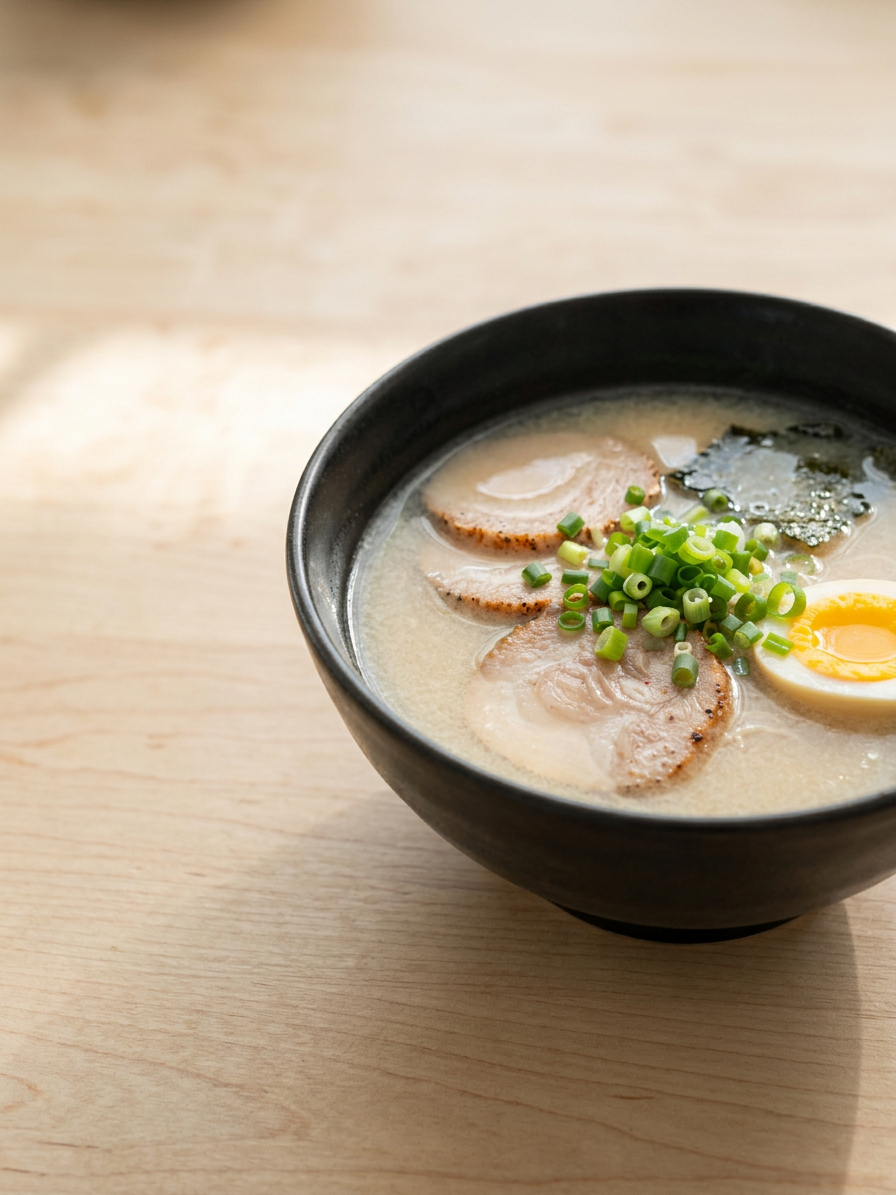
Japanese food in Hawaii goes far beyond sushi and ramen.
Walk through a local supermarket and you may find rice, tofu, miso, nori, furikake, noodles, Japanese vegetables, pickles, sauces, fresh seafood, bento, and many other familiar ingredients and prepared foods.
Some products may look exactly like something you would find in Japan. Others have evolved into something distinctly local.
That’s part of the fun.
Foods and ingredients from different cultures often sit side by side—and eventually become part of the same Hawaii kitchen.
Discover Hawaii Through Its Supermarkets
Most visitors experience Hawaii through beaches, hotels, restaurants, and sightseeing.
But if you want to see a little more of how people actually live here, go grocery shopping.
Look at what’s in the produce section. See which fish are available that day. Browse the sauces and seasonings. Check out the prepared foods, snacks, local coffee, frozen foods, and even what people are putting into their shopping carts.
A supermarket can tell you a surprising amount about everyday life in Hawaii.
For visitors from the U.S. mainland, Europe, or other parts of the world, the abundance of Japanese and Asian products can be an unexpected part of the Hawaii experience.
And even for visitors from Japan, Hawaii supermarkets can be fascinating. You’ll find familiar foods alongside local products, American groceries, tropical ingredients, and Hawaii versions of foods you already know.
What Should You Look For?
That depends on what you want to experience.
You might explore Hawaii-grown fruits and vegetables, local snacks, coffee, seasonings, fresh seafood, Japanese ingredients, Asian pantry staples, or products that are difficult to find back home.
If you’re staying in a condominium or vacation rental, you might also want practical groceries for your stay—breakfast foods, drinks, snacks, fruit, simple meals, or ingredients to cook in your kitchen.
And sometimes you simply want someone local to tell you:
“Which one would you buy?”
“Is this popular in Hawaii?”
“What do you make with this?”
“Where can I find Japanese ingredients?”
“Is there something similar that’s made in Hawaii?”
Those little questions can turn an ordinary grocery trip into a much more interesting experience.
Shop Hawaii with a Japanese Local Guide
This is also one of the ideas behind Hale Table Hawaii’s Grocery Shopping Experience.
Instead of trying to figure everything out on your own, you can explore a Hawaii supermarket or local market together with a Japanese guide who lives in Hawaii and understands both Japanese and local food culture.
We can help you discover local favorites, Hawaii-grown foods, Japanese and Asian ingredients, products for your vacation rental, gifts to take home, and everyday foods that locals actually buy.
For Japanese visitors, having Japanese-language support can also make it easier to ask questions, understand unfamiliar products, and find ingredients that suit your stay.
For international visitors, it can be a chance to explore the Japanese influence on Hawaii’s food culture through the perspective of someone who understands both.
It’s not just about finding groceries.
It’s about discovering Hawaii through everyday food.
From the Market to Your Kitchen
And the experience doesn’t have to end at the supermarket.
If you’re staying somewhere with a kitchen, the ingredients you discover can become part of your Hawaii experience.
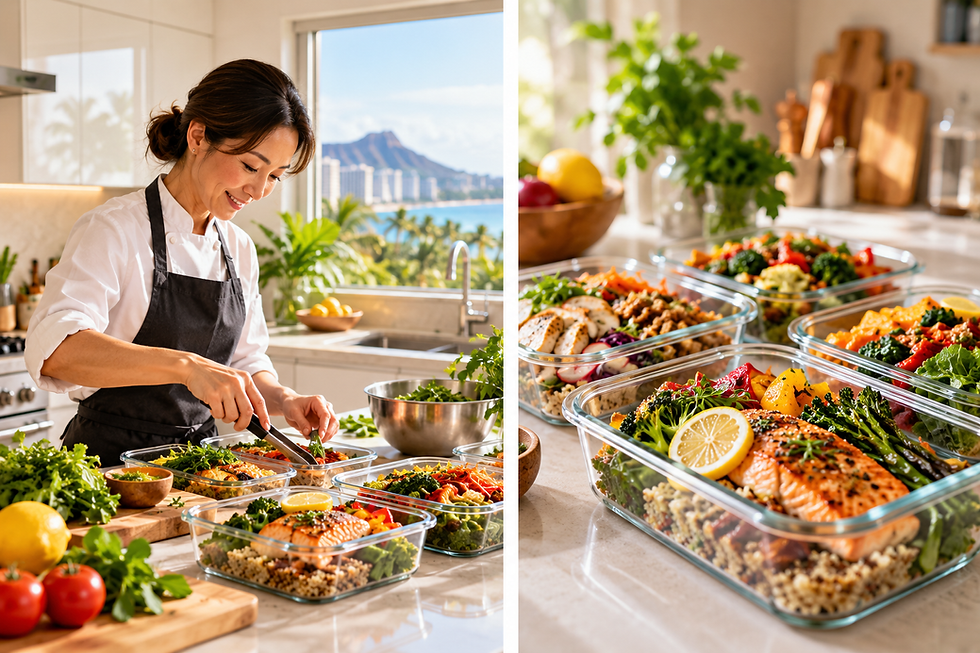
Choose fresh ingredients together, bring them back to your vacation rental, and turn them into a meal.
You can cook alongside your chef, ask questions, and participate as much as you like.
Or you can simply relax while your chef prepares the meal for your family or group.
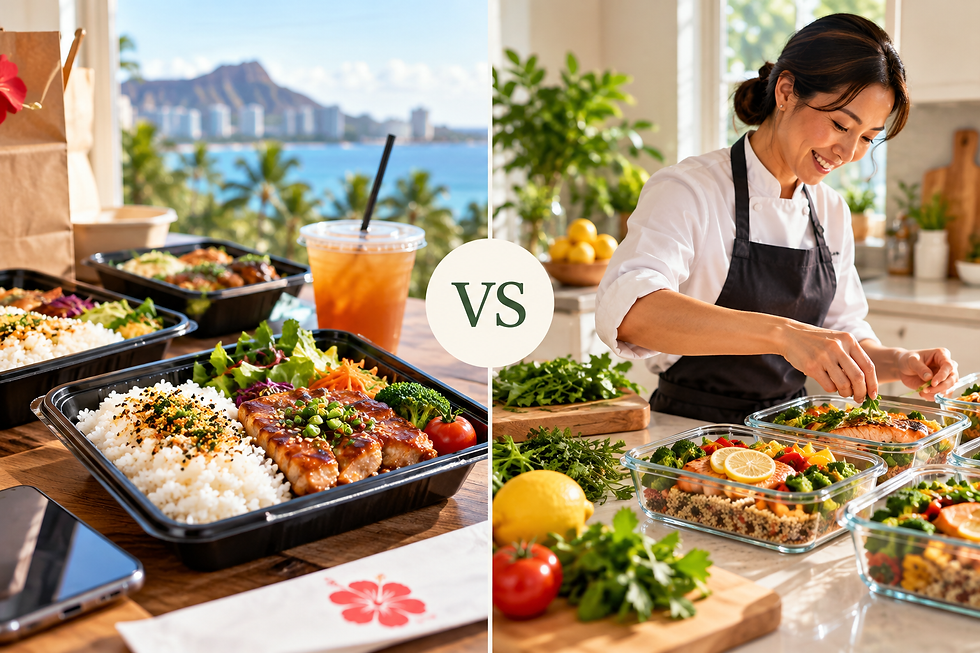
For larger families and groups, this can be especially enjoyable. Instead of everyone ordering separately at a restaurant, you can shop together, share a meal together, and even prepare extra portions to enjoy later during your stay.
That’s the idea behind our Shop & Cook Experience:
Shop together. Cook together—or leave the cooking to us. Then share the table.
A Different Side of Hawaii
There are many ways to experience Hawaii.
The beaches and restaurants are certainly part of it. But sometimes the most memorable discoveries happen in ordinary places.
A supermarket aisle.
A local market.
An unfamiliar vegetable.
A snack you’ve never seen before.
A Japanese ingredient that somehow became a Hawaii favorite.
Exploring Hawaii’s Japanese and Asian food culture gives you a glimpse into the generations of people, cultures, and flavors that have shaped everyday life on the islands.
And you may go home with more than groceries.
You may leave with a better understanding of how Hawaii actually eats.
Want to Explore Hawaii Through Food?
Explore a local supermarket or market with Hale Table Hawaii and discover the foods, ingredients, and everyday favorites that make Hawaii’s food culture so unique.
Or take it one step further—from the market to the table.

コメント